How companies customize vending machines: wraps, screens, product selection, and their own products in the machine.
- Two kinds of customization
- The wrap
- Temporary or permanent
- The screen
- A selection for specific people
- Products with your own brand
- Machines for gifts and giveaways
- Who does what
- Put it in the agreement
- Appearance and the building
- Keeping it looking good
- Example: a machine for a company event
- What to check before you decide
- FAQ
Most vending machines look like they could stand anywhere. A gray or black cabinet, a glass front, a row of buttons. That is fine in a corridor, but a company that cares about its image may want more. A machine can carry the company's colors, show its messages on a screen, and sell products picked for the people who actually use it. This post explains what can be customized, how the appearance and the selection are tailored, who decides what, and what to agree on before the first wrap goes on.
Two kinds of customization
Customizing a machine usually means one of two things, or both. The first is appearance: how the machine looks from the outside and what it shows on its screen. The second is selection: which products it sells and for whom. A wrap with company graphics changes nothing inside the machine. A carefully chosen selection changes nothing on the outside. Together, they can make a machine feel like part of the place rather than something that was dropped off. The scope of possible changes depends on the machine model and on the arrangements with the operator. Not every machine has a screen, and not every operator works with every kind of product. It helps to start by asking what is possible with the device in question.
The wrap
A wrap is a printed film applied to the machine's cabinet. It can show a company's logo, colors, a photo, or the graphics of an event. Wraps are popular because they change the look of a machine without changing the machine itself. They can cover the sides, the front around the glass, or both. How much of the surface can be covered depends on the model. The glass front, the payment area, and the information signs need to stay visible and readable. A wrap that hides the price list or the operator's contact details is a design error, however good it looks. The graphic design is usually done by the company or its agency, and the printing and application by a specialist.
Temporary or permanent
A wrap doesn't have to stay forever. Wraps are often used for events, product launches, or campaigns. A machine at a trade fair can carry the exhibitor's graphics for a few days and then go back to its usual look. In an office, a wrap may stay for much longer and become part of the interior. Whether a wrap can be removed cleanly depends on the material and on how it was applied. The specialist who applies it can say what to expect. It is worth asking about this before the campaign, not after. The operator may also have its own rules about what can be put on its machines, especially if the machine is not yours.
The screen
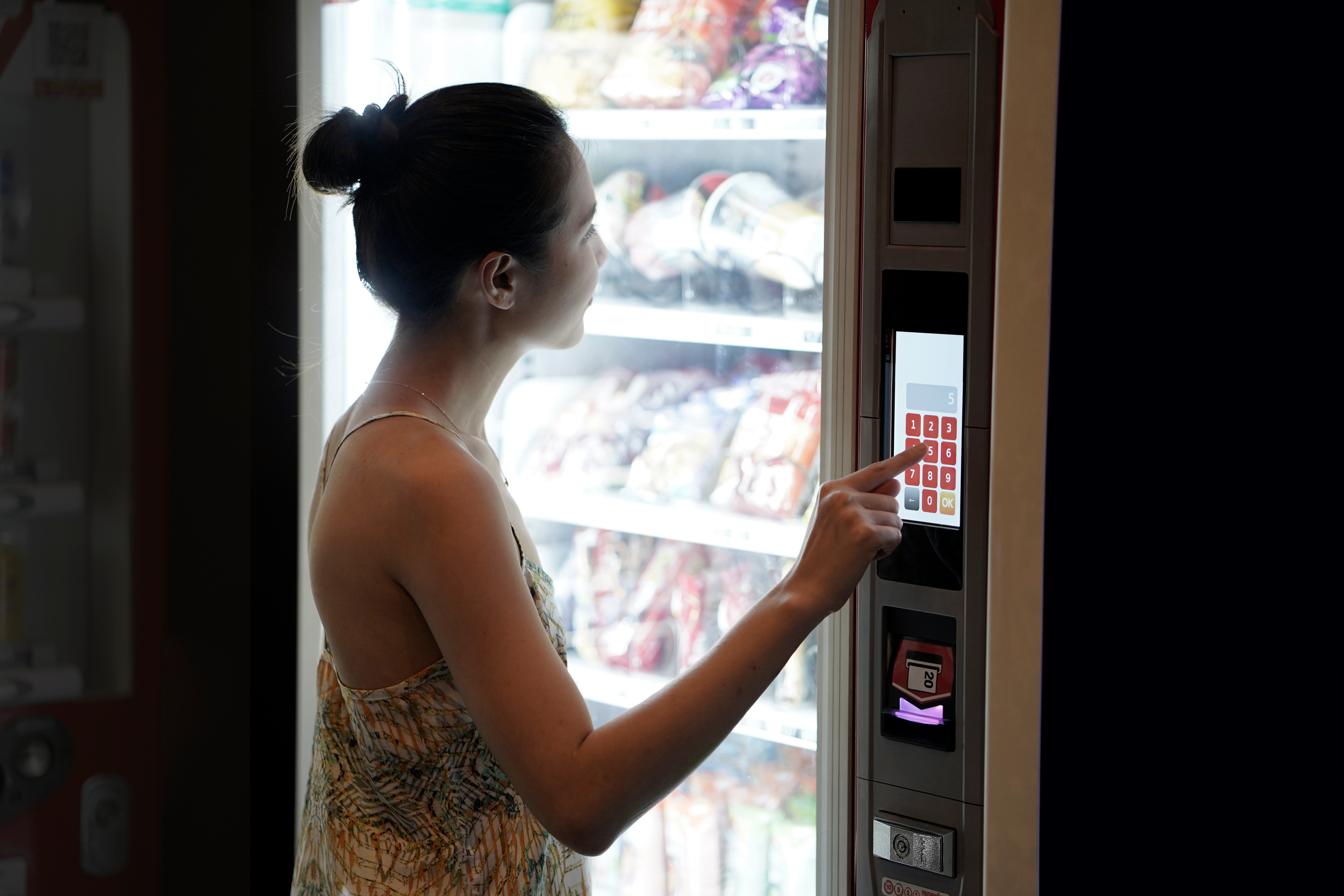
Some machines have a touchscreen instead of, or next to, the classic buttons. A screen can show more than the product list. It can display the company's own messages: a welcome for guests, information about an event, a reminder about a healthy-eating week, or a simple greeting. On some machines, the content can be changed remotely. How much control the company has over what appears on the screen depends on the machine's software and the agreement with the operator. A screen with constantly changing content can attract attention. A screen with too much content can get in the way of buying a sandwich. The best messages are short, readable, and changed often enough that people still notice them.
A selection for specific people
Customization isn't only about looks. The selection can be chosen for a specific group: employees, event guests, or customers. In an office where many people work late, filling meals may matter more than candy. At a sports event, water and light snacks may sell best. At a conference, guests might appreciate coffee and something small between sessions. The operator usually knows which products sell well in similar places. The company knows its people. Putting these two kinds of knowledge together gives a selection that makes sense. It is worth reviewing the selection after a few weeks, because what people say they want and what they actually buy are not always the same.
Products with your own brand
Some companies want to sell their own products from the machine. A food company might use a machine to show its range. A company with branded merchandise might put mugs, notebooks, or small gadgets into a non-food machine. Technically, many products can be sold from a machine if they fit the spirals or compartments. Products still have to meet the requirements that apply to their type. Which requirements those are depends on the product and is not something we describe here. The company that makes or supplies the products is usually the first source. For food, the producer and an advisor in that area can help. For other goods, the supplier should know what applies.
Machines for gifts and giveaways
A machine doesn't always have to sell. At some events, companies use machines to hand out samples or gadgets. Guests might get a code, a card, or a token that lets them take a product. The machine then becomes a small attraction rather than a shop. Whether a particular machine can work this way depends on its payment system and software. It is worth asking the operator early, because a giveaway setup may need a different configuration than ordinary sales. It also helps to think about quantities. A machine that runs out in the first hour of a two-day event leaves the stand with an empty box and a lot of explaining to do.
Who does what
Customizing a machine involves several people. The company knows what it wants to say and to whom. A graphic designer prepares the artwork. A specialist prints and applies the wrap. The operator handles the machine, its service, and often the products. If the machine sells the company's own products, someone has to deliver them and decide what happens with the ones that don't sell. If something isn't agreed, it tends to land on whoever is closest when the problem appears. That is usually the person at the reception desk or the stand manager. A short list of responsibilities agreed at the start saves a lot of phone calls later.
Put it in the agreement
The original idea is simple, but the details are not. Who designs the graphics. Who pays for the print and the application. Who is responsible for the products and their quality. How long the campaign lasts and what happens to the wrap afterward. Who changes the screen content and how often. What happens if the machine is damaged or the wrap peels off. All of this is worth putting into the agreement with the operator. If the machine belongs to the operator, the operator will have its own conditions. If you are unsure what the agreement should cover in your situation, a lawyer can help. Clear arrangements make the creative part much easier.
Appearance and the building
A branded machine still stands in a specific building. The property manager may have rules about how equipment in shared areas can look. A bright wrap may fit perfectly in a startup's office and less well in a historic lobby. If the machine stands in a shared space, such as a corridor in an office building used by several companies, the property manager's consent may be needed. It is worth checking this before printing. It also helps to think about lighting. A wrap that looks great on screen may look quite different under fluorescent lamps. A test print or a mock-up on site can prevent disappointment.
Keeping it looking good
A wrapped machine looks great on day one. After a few months in a busy corridor, it may look less impressive. Carts scratch the film, the edges start to lift, and the glass collects fingerprints. A neglected machine with your logo on it says more about your company than you might want. That is why it helps to agree who keeps the cabinet clean and who reacts when the wrap gets damaged. The operator's service usually cleans the machine during restocking. Repairing or replacing a wrap is a separate matter, better written into the agreement.
Example: a machine for a company event
Picture a company organizing an internal event for its employees. It wants a machine in the event's colors with a few healthy snacks and drinks. The company's designer prepares the graphics. The operator checks which parts of the machine can be wrapped and which must stay clear. A specialist applies the wrap a few days before the event. The operator fills the machine with products agreed with the organizers. The screen shows the event's program. After the event, the wrap comes off and the machine goes back to its usual place. The whole thing works because everyone knew their part in advance.
What to check before you decide
Before you order a custom-branded machine, go through a few questions:
- what can be customized on this specific model,
- which areas of the machine must stay visible and uncovered,
- who designs, prints, and applies the wrap,
- whether the screen content can be changed, and by whom,
- who is responsible for the products, including your own,
- how long the campaign lasts and what happens to the wrap afterward,
- whether the property manager needs to agree.
A branded machine is a small piece of your company standing in a corridor. It is worth making sure it says what you want it to say, and that the price list can still be read.
Related reading: Toy and Gadget Machines and Unusual Vending Machines in Poland.
FAQ
Can a machine be wrapped temporarily? Yes. Wraps are often used for events and campaigns.
Can we sell our own products? Yes, if they meet the requirements for that product type and fit the machine.
Can we change what the screen shows? It depends on the machine's software and the agreement with the operator.
Does a wrap damage the machine? That depends on the material and the application. Ask the specialist who applies it.