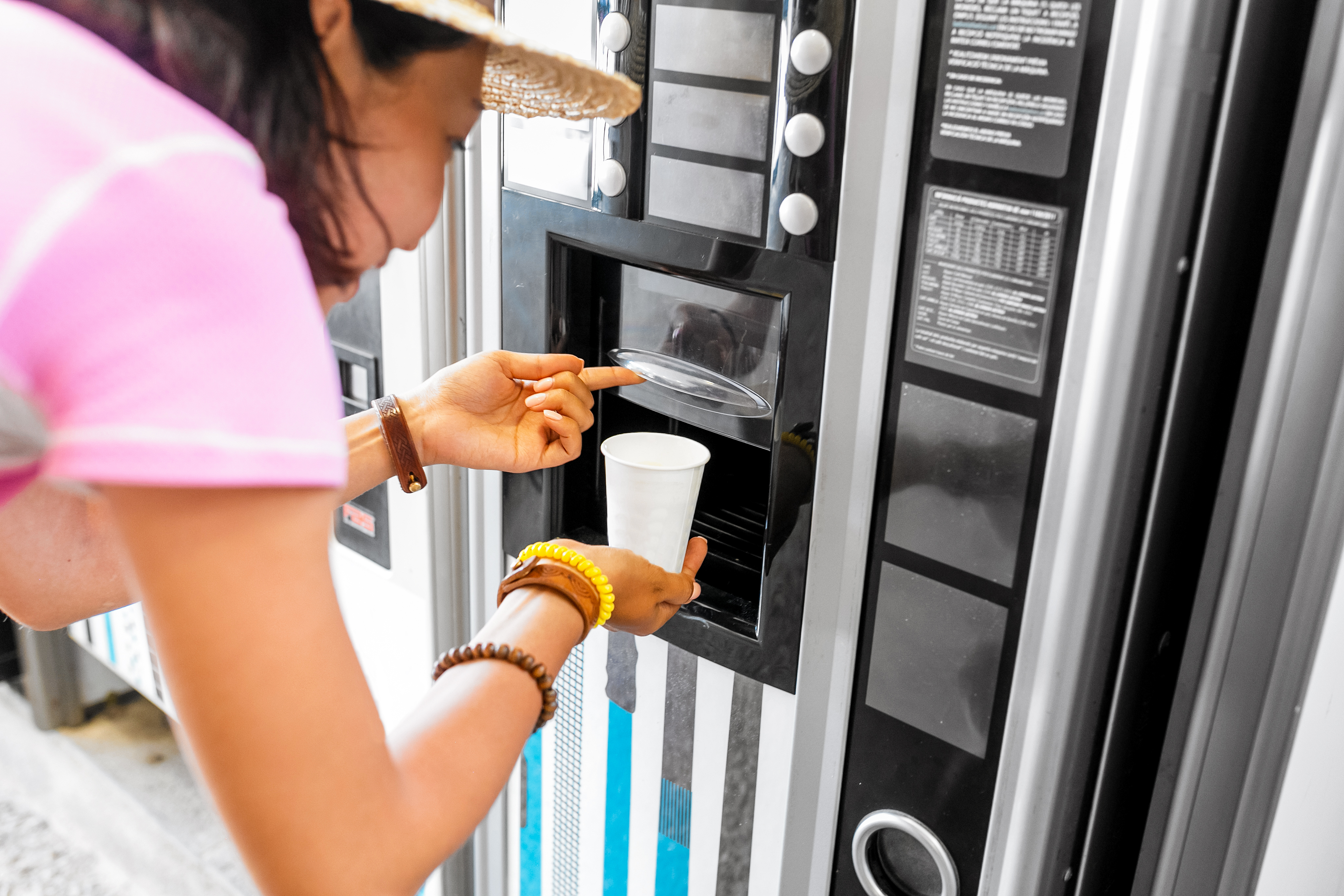
What unusual vending formats exist around the world: hot meals, fresh produce, books, umbrellas, and services.
- Why machines sell more and more things
- Food that isn't a snack
- Everyday items
- Machines that provide services
- Souvenirs, gifts, and small art
- Flowers and plants
- Machines for a short time
- Local tastes and local habits
- Rules to keep in mind
- The technology behind unusual formats
- How to read stories about amazing machines
- Does unusual mean profitable
- From idea to machine
- Location decides everything
- Servicing unusual machines
- Example: an airport hotel
- What to check before you decide
- FAQ
Most of us picture a vending machine as a candy bar stuck in a spiral or the coffee machine in the office hallway. Around the world, though, vending machines sell much more. Hot meals, fresh fruit, books, umbrellas, flowers, and sometimes services instead of products. This isn't a ranking of the strangest machines on the internet. We won't repeat stories that can't be checked. Instead, we cover the main kinds of unusual machines, explain what makes them work, and suggest what that means if you're thinking about something unusual at your site.
Why machines sell more and more things
A vending machine has a few advantages an ordinary store doesn't. It works at any hour, takes up little space, and needs no one behind a counter. That makes it a good fit where a store wouldn't survive or would be closed exactly when someone needs something. The machines themselves have changed too. Cooling and heating arrived, along with lifts for delicate products, locker units, and screens with descriptions. Card and phone payments came on top of that. As a result, a machine can sell something pricier, bigger, or more fragile than a bag of chips. The limit on what can be sold has moved a long way.
Food that isn't a snack
One of the most interesting groups is machines selling food you'd hardly call a snack. They sell hot meals, soups, pasta, pizza, or fresh fruit. They often have heating or cooling, sometimes both. Some prepare the dish on the spot, while others dispense a ready product to heat in a microwave nearby. These machines take much more work than a drinks machine. Temperature, use-by dates, and cleanliness all need watching. The operator knows the sanitary rules for this kind of sale and is responsible for meeting them. For the customer, one thing counts: a warm meal at an hour when no kitchen is open.
Everyday items
The second group is things we buy on the spur of the moment. An umbrella when it suddenly starts to rain. A phone cable when the battery is running out. Travel toiletries left at home. A book for a long trip. These machines appear where people are on the move or waiting a long time: train stations, airports, hotels, and hospitals. Their strength is hitting the right moment. The same umbrella interests nobody on a sunny day. That's why operators of these machines watch closely what sells and when. A range that works well in one spot may have no customers at all in another.
Machines that provide services
Some machines don't sell products at all. They let you charge a phone, pick up a parcel, rent equipment, or drop something off for a return. The best-known example is parcel lockers, which have become part of everyday life in many cities. Rental lockers work similarly, for example for power banks or tools. The customer pays or logs in, and the machine opens the right compartment. This shows that a vending machine is really a way to hand something over without staff, not just a box of drinks. If people at your site often ask the staff for something, that may be a sign a machine could take over part of that work.
Souvenirs, gifts, and small art
A separate group is machines that sell something for fun rather than out of need. Souvenirs in a museum, small gifts at an airport, little items from local makers in a café or gallery. Sometimes the purchase itself is part of the fun, because the customer doesn't know exactly what they'll get. These machines work well where people have a moment to spare and feel like a small treat. They need careful packaging and good descriptions, because the customer can't look at the item up close. If you're selling items from local makers, agree with the operator on who the seller is and who handles complaints. The customer should know before paying.
Flowers and plants
A flower vending machine sounds like a novelty, but it makes simple sense. Someone comes home from work late in the evening and remembers a birthday. Someone is visiting a loved one in the hospital, and the florist is already closed. Flowers need care, though. They need the right temperature, often cooling, and they lose freshness quickly. The operator has to replace them often, which means more visits than an ordinary machine. That's why such a machine makes sense where traffic is regular and demand is easy to predict. The flower supplier knows the storage details. The machine just helps sell them at any hour.
Machines for a short time
Not every unusual machine has to stand in the same place for years. Sometimes it appears for a few days during an event, a festival, or a conference. It sells things that are useful right there: water, rain ponchos, earplugs, chargers. A machine like this needs a good plan. You have to settle the spot, the power, delivery and pickup, and who keeps an eye on it at night. The event organizer decides on the spot and the rules on their grounds. If the event is outdoors, check the manual to see whether the machine can work outside a building at all.
Local tastes and local habits
How popular unusual machines become depends heavily on the place. In one country, people happily buy meals from a machine. In another, they're wary. In one city, a bread machine is ordinary, while in another it raises eyebrows. Shopping habits, how densely people live, how safe public spaces feel, and regulations all play a part. So the fact that a format succeeded abroad doesn't mean it will work in your city. In Poland, for example, you can see bread machines and parcel lockers, but many other formats are only starting to appear. It's worth watching what works in similar places near you.
Rules to keep in mind
The more unusual the product, the more questions about the rules for selling it. Food, cosmetics, over-the-counter medicines, alcohol, and tobacco products are categories with special requirements, and some of them may not be suitable for vending at all. We don't state any rules here, because they depend on the country, the product, and the place. If you're thinking about something unusual, start by talking to an operator who knows the requirements in their field. When in doubt, ask a lawyer or the relevant authority. It's better to check before you order a machine than after it's already standing in the hallway.
The technology behind unusual formats
Most unusual machines rely on a handful of technical solutions. Cooling and heating make it possible to sell food. A lift delivers products that can't fall from a height, like glass or electronics, to the pickup door. A locker unit suits items of different shapes and sizes. A screen can show a photo, a description, and ingredients. Card payment makes it possible to sell pricier products without the hassle of change. A network connection gives the operator a remote view of the machine's status. Not every unusual machine has all of these. The choice depends on the product, and the manufacturer describes the details of a specific device.
How to read stories about amazing machines
Plenty of lists of the world's strangest vending machines circulate online. Some describe real devices, some are one-off promotional stunts, and some are hard to verify at all. A photo of a machine with an unusual product doesn't tell you whether it ran for a week or ten years. It doesn't tell you whether anyone used it, either. So treat these stories as inspiration, not as proof that an idea works. If something catches your interest, look for information from the device manufacturer or from an operator who runs a similar machine. Real experience from a similar place is worth more than the most striking photo.
Does unusual mean profitable
An unusual machine draws attention. People take photos of it, tell their friends, and sometimes post about it online. That's nice, but it doesn't always turn into sales. A novelty everyone stops to look at may sell to only a few. Meanwhile, an ordinary machine with a well-chosen range can work quietly for years. We don't know the financial results of specific machines around the world, and we won't pretend to. If someone promises you an unusual machine will definitely turn a profit, ask for data from similar places. Numbers from another country or another type of site say little about your situation.
From idea to machine
If you have an idea for an unusual machine, it helps to go through a few steps. First, think about who it's for and in what situation. Next, check whether the product can be sold from a machine at all and whether it needs cooling, heating, or gentle dispensing. Then talk to an operator with experience with similar devices. Ask about power, the spot, restocking, and service. Finally, check the rules for selling that product. Only then does it make sense to talk about a specific model. This order saves time and money, and sometimes it shows that a simpler solution is enough.
Location decides everything
The best machine idea won't work in the wrong place. A hot-meal machine makes sense where people work or wait at hours when nothing else is open. An umbrella machine is useful by a station exit, not deep inside the building. A flower machine may sell near a hospital or a cemetery, but not necessarily in an office. Before you agree to an unusual machine at your site, think about who will walk past and what they might need at that moment. Permission to place a machine in a building's shared area belongs to the property manager, and an electrician decides on the power connection.
Servicing unusual machines
An unusual machine is often a less common model or a device adapted for a specific product. That matters when something breaks. Spare parts can be harder to get, and the technician has to know that particular setup. So before you decide, ask the operator who services the machine and how quickly they respond. Also find out what happens to the stock while the machine is out of order, especially if it's food or flowers. An ordinary drinks machine can wait a few days for a repair. A hot-meal or fresh-produce machine can't. Clear rules in writing spare both sides a lot of stress.
Example: an airport hotel
An airport hotel takes in guests at all hours, including the middle of the night. The front desk often hears requests for things that aren't in the room: a toothbrush, a charger, something to eat after a late landing. The hotel manager considers an unusual machine. Instead of ordering one right away, they spend a few weeks collecting guest requests with the front desk. It turns out the most common ones are travel toiletries, chargers, and simple snacks. The operator suggests a locker unit for toiletries and electronics next to an ordinary snack machine. The idea is less flashy than a hot-meal machine, but it meets what guests actually need.
What to check before you decide
If you're considering an unusual machine at your site, ask yourself and the operator about a few things:
- who the machine is for and in what situation,
- whether the product can be sold from a machine and which rules apply,
- whether cooling, heating, a lift, or lockers are needed,
- what power is needed and who will connect the machine,
- how often it will be restocked and who responds to breakdowns,
- how customers report a problem and how refunds work.
It's best to have the answers in writing and to put the terms of cooperation in the agreement.
Related reading: Unusual Vending Machines in Poland.
FAQ
Are these machines in Poland? Some formats are, such as bread machines and parcel lockers. Others are only starting to appear.
What drives the popularity of unusual machines? Shopping habits, regulations, and the location where the machine stands.
Can you sell anything from a vending machine? No. Some products have to meet special rules, and some may not be suitable at all. Ask the operator, and a lawyer if in doubt.
Does an unusual machine always pay off? No. It draws attention, but location, range, and service decide the sales.