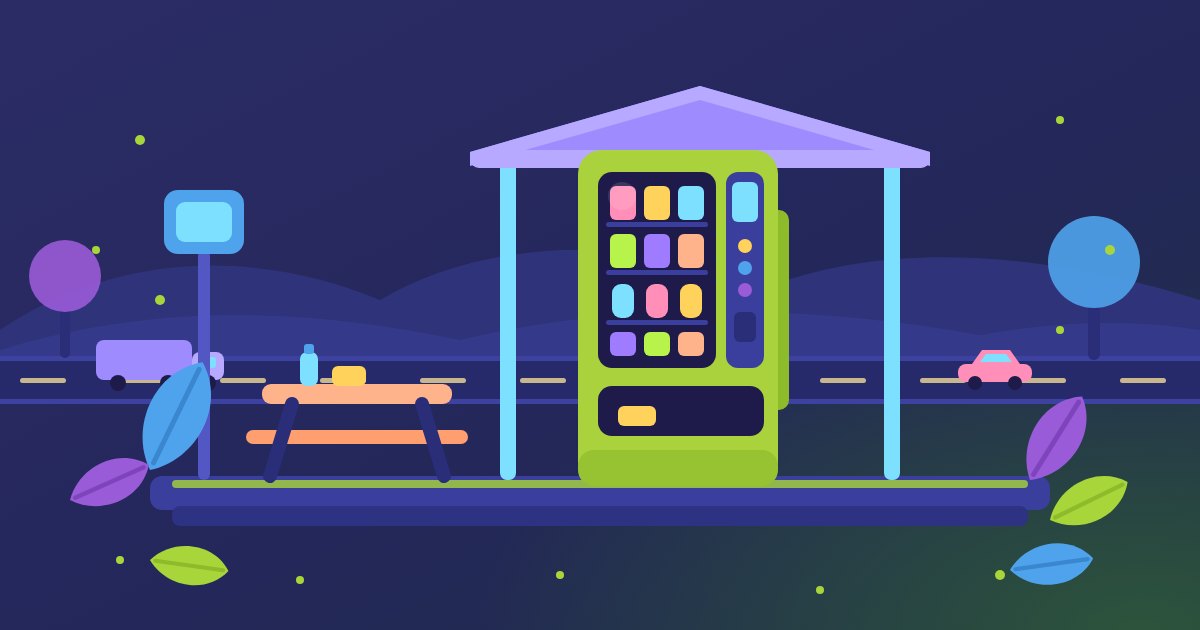
At a rest area without a gas station, a vending machine may be the only place to buy water, coffee or a snack. We explain what drivers buy and what to look for.
- What a rest area is and how it differs from a gas station
- What drivers buy from a vending machine on the road
- Around the clock with no staff: payment, lighting, security
- Professional drivers and overnight stops
- Seasonal traffic and weekends
- Who is responsible for what
- Example: an overnight stop halfway along the route
- How to prepare for a longer drive
- What to look for as a customer: the label and operator information
- What to check before deciding on a rest area machine
- FAQ
It's late afternoon, you've been on the highway for a few hours, and there's still a long way to go. You pull into the next rest area: a parking lot, a few picnic tables, restrooms and some greenery. There's no restaurant and no cashier, but under a canopy stands a snack and drink vending machine. In a few minutes you buy a bottle of water and something small to eat, stretch your legs and get back in the car.
In this article, we explain what a highway rest area is, how it differs from a gas station, what drivers usually buy from a vending machine on the road, and what matters when a machine runs around the clock with no staff on site.
What a rest area is and how it differs from a gas station
A highway rest area is a designated stop along an expressway or highway where travelers can pull over, take a break and take care of basic needs during a trip. In Poland, these stops are known as MOPs. Their facilities vary a lot. Some have only parking, restrooms, picnic tables and trash cans. Others also have a gas station, a restaurant, a store and sometimes even a place to stay overnight.
This article focuses mainly on the first, simpler type: stops without a full gas station and without staff. That's where a vending machine can be the only place to buy something to drink or eat. If you're interested in machines placed next to fuel pumps and car washes, read our article on vending at fuel stations and car washes.
The difference is practical. At a gas station, customers can choose between the store, the cashier and the vending machine. At a basic rest area, there's usually no choice, so what counts is whether the machine works, whether it accepts a convenient payment method and whether it has what travelers actually need.
What drivers buy from a vending machine on the road
Shopping on the road is usually quick and simple. Drivers don't want to spend long choosing; they just want to restock what's missing in the car. Most purchases fall into a few groups:
- Water and drinks – a bottle of water is the basic road trip purchase, especially in summer and on long drives.
- Coffee and hot drinks – where there's a coffee machine, some drivers stop specifically for a cup of something hot.
- Small snacks – bars, crackers, nuts, wafers or pretzel sticks that are easy to eat during a break or take back to the car.
- Something more filling – sandwiches or other ready-made products, if the machine is refrigerated and the operator rotates the selection regularly.
- Small travel items – tissues or chewing gum, the kind of things that are easy to forget before leaving.
Packaging matters too. On the road, products that can be resealed and set aside, don't crumble onto the seats and fit in a cupholder or glove box work better.
Around the clock with no staff: payment, lighting, security
A vending machine at a rest area usually runs on its own, day and night. Nobody is there to give change, help with a stuck product or answer a question. That's why a few things matter more here than in an office or a school.
Payment
Not every traveler carries cash, and on the road there's often nowhere to break a bill. That's why contactless payment by card or phone is useful in a place like this. If the machine also takes coins, it should be clear whether it gives change.
Lighting and visibility
After dark, a well-lit machine is easier to find, and customers feel more comfortable walking up to it at night. Ideally, the machine stands in a visible spot close to the parking lot and restrooms rather than off to the side.
Weather resistance
Out in the open, a machine is exposed to rain, wind, dust and big swings in temperature. A canopy or a sheltered spot next to the restroom building helps keep it in good condition. A reliable power supply is essential too, because without it neither refrigeration nor payments work.
Security
Places without permanent staff can be exposed to vandalism. A sturdy cabinet, good lighting and a location within view of other travelers reduce that risk. Customers, in turn, should know where to report a problem if the machine doesn't dispense a product.
Professional drivers and overnight stops
Many rest areas are also used by truck, bus and van drivers. Their stops look different from a family's short break on the way to vacation. A professional driver often stays longer, sometimes overnight, and plans breaks around their schedule.
For these customers, a vending machine can be the only source of a hot drink or a snack when everything nearby is closed. What counts is availability at any hour, a predictable selection and a machine that isn't empty on a Sunday evening. Drivers who regularly travel the same route quickly learn where they can count on a working machine.
At night, traffic is usually lighter, and buyers' needs tend to differ: a hot drink and something filling often matter more than sweets for the kids.
Seasonal traffic and weekends
Highway traffic isn't spread evenly. During summer vacation, long weekends and holidays, rest areas get much busier, including with families with children. Water, juice and small snacks sell out faster, and a machine can empty sooner than usual.
For the operator, this means restocking more often in peak season and checking the machine before an expected rise in traffic. For travelers, it's a reminder not to assume everything will be available at every stop during the busiest times.
Who is responsible for what
Several parties are usually involved with a vending machine at a rest area, each with a different role:
- The site manager decides whether and where a machine can be placed, and is responsible for the site itself: parking, restrooms, lighting and cleaning.
- The machine operator is responsible for the machine, the selection, restocking, payments and handling complaints.
- The customer uses the machine and reports problems to the operator, such as a product that wasn't dispensed or a failed payment.
The terms for placing a machine at a particular site are agreed with whoever manages that site.
Example: an overnight stop halfway along the route
Picture a rest area with parking for cars and trucks, restrooms and a few picnic tables. The nearest gas station is dozens of miles away. Under a canopy next to the restrooms, there's a snack and drink vending machine, and next to it a coffee machine.
During the day, they're used mostly by car drivers who stop for 15 minutes or so. They buy water, coffee to go and something sweet for the kids. After dark, the lot is mostly trucks. Their drivers come to the machine in the evening and early in the morning, usually for a hot drink and a sandwich.
At a site like this, the operator looks not only at sales but also at which products run out fastest on weekends and at night. Based on that, they decide how often to restock the machine and which products to keep in larger quantities.
How to prepare for a longer drive
A vending machine at a rest area is a handy backup, but it's not worth building your whole trip plan around it. A few simple steps make the drive easier:
- Bring water from home – a few bottles in the car give you a reserve in case the machine is empty or out of order.
- Plan your stops – check in advance where the larger service areas are along the route and where there are only basic parking areas.
- Keep a card or phone handy – contactless payment is the most convenient, but a few coins can come in handy too.
- Take regular breaks – a stop is a good chance to get out of the car and walk around before you continue.
- Pack something for the kids – their favorite snacks from home save frustration if the machine doesn't have what they like.
If you drive an electric car, your stop often lines up with a charger. We cover what works in that setting in our article on vending at EV charging stations.
What to look for as a customer: the label and operator information
Before you buy, it's worth checking a few things on the machine and the product:
- Operator details – the machine should show who runs it and how to contact them.
- How to report problems – a phone number, an email address or a code that leads to a form.
- Product label – ingredients, allergen information and the best-before date are on the packaging, just like in a store.
- Price – it should be visible next to the product or on the screen before you pay.
What to check before deciding on a rest area machine
If you're considering a vending machine at a site like this, start by answering a few questions:
- What does traffic look like during the day, at night and in peak season?
- Is there a reliable power supply and a sheltered spot for the machine?
- How often can deliveries and service reach the site?
- Are there other places nearby selling food and drinks?
- How will customers report a problem when there's no staff on site?
Many of these questions apply to any location far from town. You can read more about access, service and delivery planning in our article on vending in remote locations. For an overview of machines that work well for travelers, see the section on snack and drink vending machines (publisher's site).
FAQ
What is a highway rest area? It's a designated stop along an expressway or highway where you can pull over and take a break. Facilities depend on the site, from a simple parking lot with restrooms to a gas station with a restaurant.
Does every rest area have a snack vending machine? No. Facilities vary from stop to stop, so before a longer drive it's better to bring your own supply of water and snacks.
Do rest area vending machines work at night? Machines usually run around the clock, but they can be temporarily empty or out of order. So it's best not to assume you'll always be able to buy something at night.
How do I pay at a vending machine on the road? Many machines accept contactless payment by card or phone, and some also take coins. Accepted payment methods should be shown on the machine.
What should I do if the machine doesn't dispense my product? Use the operator's contact details on the machine and report the problem, including the location, the time and how you paid.
How is a rest area different from a gas station? A gas station usually has a store and staff, so the vending machine is just one option. At a basic rest area without a station, the machine may be the only place to buy something to drink or eat.