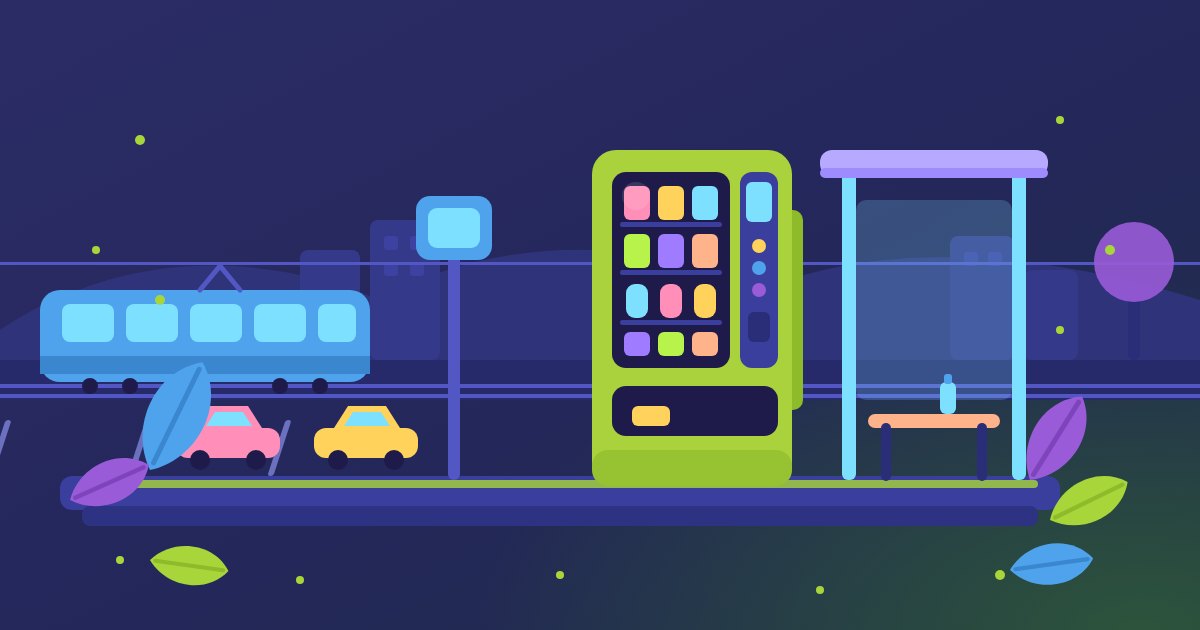
At a park-and-ride lot, a vending machine may be the only place to grab water, coffee or a snack before you transfer. Here's what works and what to look for.
- What park and ride is and who uses it
- What drivers and passengers buy before they transfer
- The daily rhythm of a park-and-ride lot
- Around the clock in a parking lot: payment, lighting, weather
- How it differs from a gas station, a rest area and a train station
- Who is responsible for what
- How to prepare for your daily transfer
- What to look for as a customer: the label and operator information
- FAQ
It's Tuesday, half past seven in the morning. You leave your car in a parking lot on the edge of town, the stop is a few steps away, and in a minute a streetcar will take you downtown. Breakfast was rushed, and there was no time for coffee. Next to the platform entrance stands a snack and drink vending machine. A minute at the screen, a tap of your phone, and you're holding a bottle of water and something for the ride.
In this article, we explain what a park-and-ride lot is, who uses it, what drivers and passengers buy before they transfer, and what matters when a vending machine stands in a parking lot and runs around the clock.
What park and ride is and who uses it
Park and ride, often shortened to P+R, is a parking lot where you leave your car and continue by public transit or train. These lots are usually built next to streetcar and bus terminals, metro stations or rail stops, often on the outskirts of a city. The idea is simple: instead of driving into a crowded downtown, the driver switches to transit earlier.
Park-and-ride lots are used mostly by people who commute every day to work or school from towns outside the city. In the morning the lot fills up, during the day the cars sit parked, and in the afternoon and evening drivers come back for them. There are also occasional visitors, for example people heading to a concert, a game or a government office, who would rather not hunt for a parking spot downtown.
The rules for using the lot, such as opening hours, fees or a required transit ticket, are set by the lot's operator. It's worth checking them on the signs at the entrance or on the operator's website, because they can differ from city to city.
What drivers and passengers buy before they transfer
Shopping during a transfer is quick. Customers have the timetable in their heads and don't want to miss the streetcar or train. So they pick what they know and what's easy to carry. Most purchases fall into a few groups:
- Water and drinks – a bottle that fits in a bag and can be finished on the way or at work.
- Coffee and hot drinks – where there's a coffee machine, some people stop for a cup to go before they board.
- Small snacks – bars, crackers, nuts or wafers that fit in a pocket and need no utensils.
- Something for a midmorning bite – sandwiches or other ready-made products, if the machine is refrigerated and the operator rotates the stock regularly.
- Small items – chewing gum or tissues, the kind of things that are easy to forget in the morning.
Packaging matters. During a transfer, resealable products that don't crumble or stain work better, because people often eat them on board or after they arrive. You can read more about what works in places with fast-moving passenger traffic in our article on vending machines at metro stations and bus stops.
The daily rhythm of a park-and-ride lot
Traffic at a park-and-ride lot has a clear rhythm. In the morning most people are in a hurry, so a quick choice and smooth payment matter most. During the day, few people stop at the machine. In the afternoon, returning drivers usually have more time, because they're no longer chasing a ride but finishing their day and getting back in the car.
Purchases differ between these two times as well. In the morning people more often reach for water, coffee and something small for the ride. In the afternoon some buy a drink or a snack for the drive home, especially when they have a longer trip ahead. On weekends and holidays, traffic can look completely different than on weekdays, because fewer people are commuting to work.
Around the clock in a parking lot: payment, lighting, weather
A vending machine at a park-and-ride lot usually runs on its own, with no staff nearby. Nobody can give change or help with a stuck product. That's why a few things matter especially here.
Payment
During a transfer, time counts, so contactless payment by card or phone is the most convenient. If the machine also takes coins, it should be clear whether it gives change. Information about accepted payment methods should be visible before the customer picks a product.
Lighting and visibility
In winter it's dark in the morning and late afternoon, so a well-lit machine is easier to find, and customers feel more comfortable using it. Ideally, the machine stands on the route between the parking lot and the stop, in a spot most people pass, not in a far corner of the lot.
Weather
A parking lot is usually open ground. Rain, snow, wind and big temperature swings affect both the machine and the customer's comfort. A canopy, a bus shelter or a spot next to a building helps keep the machine in good condition and makes buying something in the rain less of a hassle. A steady power supply is also needed, because without it neither refrigeration nor payments work.
Security
In the evening and at night, a parking lot can be empty. A sturdy cabinet, good lighting and a location within sight of other people reduce the risk of vandalism. Customers, in turn, should know where to report a problem if the machine doesn't dispense a product.
How it differs from a gas station, a rest area and a train station
A vending machine at a park-and-ride lot can be compared with a few other places where travelers buy food and drinks. Each works a little differently:
- Gas station – there's usually a store and staff, so the vending machine is just one option. At a park-and-ride lot, there's often no other place to buy food at all.
- Highway rest area – people stop there on longer trips, often only once in a while. At a park-and-ride lot, the same people come back day after day. We write more about road-trip stops in our article on vending machines at highway rest areas.
- Train station – a place with a waiting room, ticket counters and various shops, where travelers often wait longer. At a park-and-ride lot, a transfer usually takes a few minutes. You can read about machines inside station buildings in our article on vending at train and bus stations.
The biggest difference is regular customers. Someone who leaves their car in the same lot every day quickly learns whether the machine works, whether it has their favorite product and whether payment goes through without trouble. One empty machine on a Monday morning is remembered for a long time.
Who is responsible for what
Several parties are usually involved with a vending machine at a park-and-ride lot, and each has different tasks:
- The lot operator decides whether and where a machine can stand and is responsible for the site itself: parking spaces, lighting and upkeep.
- The vending operator is responsible for the machine, the product selection, restocking, payments and handling complaints.
- The customer uses the machine and reports problems to the vending operator, such as a product that wasn't dispensed or a failed payment.
The terms for placing a machine at a specific spot are agreed with whoever manages that site.
How to prepare for your daily transfer
A vending machine at the lot is a handy extra, but on a daily commute it's better not to build your whole morning around it. A few simple habits make the transfer easier:
- Keep your card or phone handy – contactless payment is fastest when the streetcar is already pulling in.
- Leave yourself a few spare minutes – buying from a machine is quick, but a line or a payment problem can take longer.
- Bring a bottle of water from home – it comes in handy if the machine is empty or out of order.
- Check the lot's rules – opening hours and parking terms are on the signs at the entrance or on the operator's website.
- Save the vending operator's contact details – if you use the machine every day, it's good to know where to report a fault.
What to look for as a customer: the label and operator information
Before you buy, it's worth checking a few things you can see on the machine and the product:
- Operator details – the machine should show who runs it and how to contact them.
- How to report problems – a phone number, an email address or a code that leads to a form.
- Product label – ingredients, allergen information and the best-before date are on the package, just like in a store.
- Price – it should be shown next to the product or on the screen before you pay.
For an overview of machines that work well at transfer points, see the snack and drink vending machines page (publisher's site).
FAQ
What does P+R stand for? P+R means park and ride. It's a parking lot where you leave your car and continue by public transit or train.
Does every park-and-ride lot have a snack vending machine? No. Facilities differ from lot to lot, so on a daily commute it's better to carry your own water and something to eat just in case.
Does a vending machine at a parking lot run 24 hours a day? Vending machines usually run around the clock, but they can be temporarily empty or out of order. The opening hours of the lot itself are set by its operator.
How do I pay at a vending machine at a park-and-ride lot? Many machines accept contactless payment by card or phone, and some also take coins. Accepted payment methods should be shown on the machine.
What should I do if the machine doesn't dispense my product? Use the operator's contact details shown on the machine and report the problem, including the location, the time and how you paid.
How is a park-and-ride lot different from a highway rest area? A rest area is a place to take a break along a highway, used mostly by people on longer trips. A park-and-ride lot is for switching from a car to public transit, and the same people usually come back to it every day.