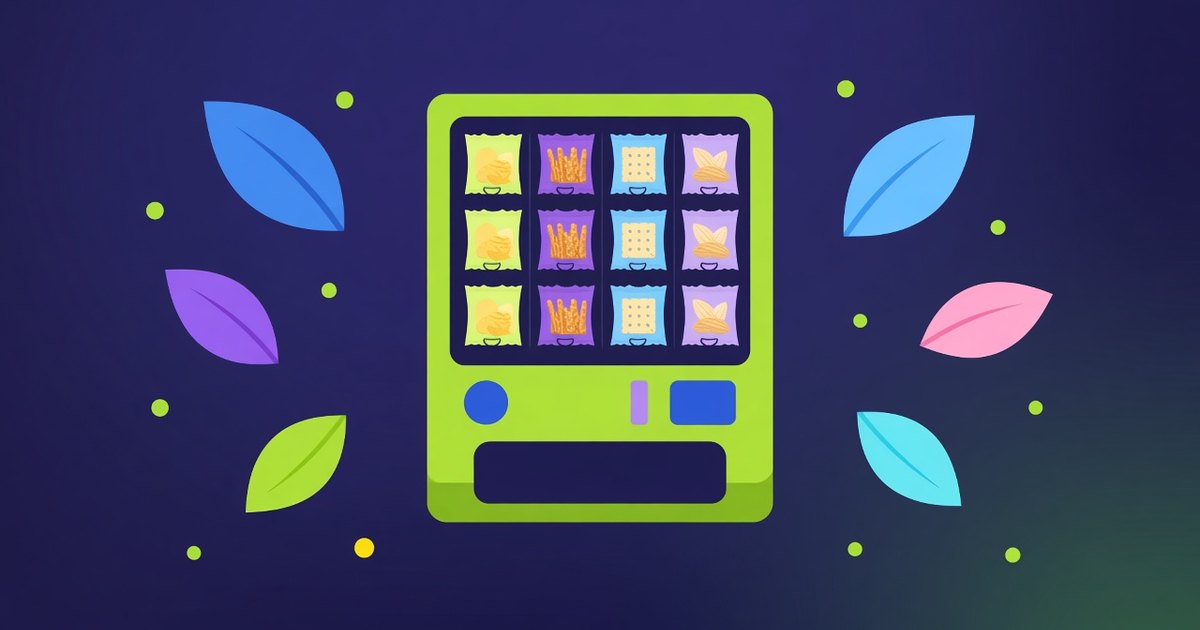
Savory snacks are a vending staple. Their packages vary in shape, which matters when stocking them.
- Why savory snacks earn their place
- Chips and air-filled bags
- Pretzel sticks, crackers, and pretzels
- Tubes and odd shapes
- Nuts and mixes
- Allergens and labels
- Storage and refrigeration
- Savory snacks next to drinks
- Where they work well
- Flavors, or how many is too many
- Lighter options and smaller portions
- Mix and rotation
- Prices and the store down the street
- What to check before you decide
- Example: a warehouse and pretzel sticks
- Where to see examples
- FAQ
It is late afternoon, and someone wants something crunchy, just not another candy bar. They walk over to the vending machine looking for a pack of pretzel sticks. They find three kinds of chips, two of them stuck in the spiral. Savory snacks look like a simple product, yet they have their own demands. The most common savory vending snacks are chips, pretzel sticks, crackers, pretzels, and nuts in small packs. Air-filled bags take more space and need spirals with a wider pitch. With nuts, clear allergen labeling on the package matters. This article covers how to match savory snacks to a vending machine, what to watch with packaging, and what to ask the operator.
Why savory snacks earn their place
Not everyone wants something sweet. Some people want a salty snack with coffee, with a drink, or just for a change of taste. Savory snacks are small, easy to carry, and usually have a long shelf life, so they suit vending well. They need no cutlery and no plate. You can eat them at your desk, on a break, or on the way to a meeting. In many places they form the second leg of the range, next to sweets. The mix depends on the people. In an office, sweets often win with coffee, but in a plant or on a campus, savory snacks can sell just as well. A sales report will quickly show which side of the machine empties faster. That is a better guide than general beliefs about what people like.
Chips and air-filled bags
Why do chips take so much space? The bags are filled with gas that protects the contents from crushing. That is good for the chips but hard on the machine. A large, soft bag takes up more room in a spiral than a flat candy bar. It needs a spiral with a wider pitch, meaning more space between the coils. Otherwise the bag jams or drops at an angle. Air-filled bags are also easy to puncture. If a spiral has a sharp edge, or the bag hits something on the way down, it can split. Then the chips quickly lose their crunch. The operator matches spirals to specific products. If you see chips jamming again and again, report it along with the selection number.
Pretzel sticks, crackers, and pretzels
Pretzel sticks and crackers usually come in flat, stiffer packs. Flat cracker packs need a narrower spiral pitch. That way, one selection holds more items. Pretzels may come in bags similar to chips or in smaller, more compact packs. It all depends on the producer. Pretzel sticks are more fragile than they look. A pack that drops from a height into the delivery bin may reach the customer with half its contents broken. That is not a product defect, but the customer may still be disappointed. Some machines have mechanisms that soften the drop. If broken pretzel sticks are a frequent complaint, ask the operator whether the selection setup can be changed.
Tubes and odd shapes
Tubes are a category of their own. Chips in tubes, or snacks in cylindrical packs, do not always fit standard spirals. They often go on special spirals or into slots. A tube rolls, so a poorly matched spiral can tilt it or push it out too early. Some machines have shelves with dividers or an elevator delivery system that handles such shapes better. Whether a given machine has these is described in the manufacturer's spec sheet. Not every product that looks good on a store shelf will work in a vending machine. An operator who knows the machine should tell you what it can sell without trouble and what is better left to the store.
Nuts and mixes
Nuts are a popular savory snack, but they need special attention. They are one of the common allergens. They can cause a serious reaction in people who are allergic, and traces of nuts show up in many other products too. That is why clear allergen labeling on the package matters with nuts. Mixes of nuts with dried fruit or other snacks usually have a longer ingredient list. The customer has to read it. Nut packs tend to be small and heavy for their size, so they sit well in a spiral. Sometimes they come in resealable bags that the customer can open and close again. That is handy at a desk, where someone eats half the pack and saves the rest for later.
Allergens and labels
Nuts, gluten, and sesame are marked on the label. Customers should check before buying, and operators should make sure the label is readable through the glass or on screen. At a vending machine, the customer cannot ask a clerk, so they rely on what they can see. If a pack faces backward or sideways, the label may be hidden. Some machines have a screen with a product description. In that case, the description should come from the label, not from memory. The producer is responsible for what the label says. The operator is responsible for having the right product in the right selection. We do not list allergen labeling rules here, because that is a regulatory area. When customers ask, point them to the label, and to the operator if in doubt.
Storage and refrigeration
Do savory snacks need refrigeration? Usually not. The producer gives storage conditions. Most chips, pretzel sticks, and crackers handle normal conditions in an office or hallway well. That does not mean the location is irrelevant. Sun on the glass can heat up the inside of the machine. Moisture from a kitchen or a building entrance can make packaging soft. Snacks with a coating or with chocolate behave very differently from plain chips. We give no temperatures here, because they depend on the product. Check the conditions on the pack, and if you are unsure, ask the operator whether the machine in that spot meets them.
Savory snacks next to drinks
In many places, savory snacks sit in the same machine as drinks, or right next to a drinks machine. That makes sense. Someone who buys chips often wants something to drink too. A combo machine, with snacks on top and chilled drinks below, lets people make both purchases in one place. Choosing such a machine depends on the available space, the number of people, and whether there is already a drinks source nearby. If a coffee machine stands next to it, keep in mind the clearances between devices that the manufacturer gives in the manual. Heat from one device should not warm up the other. It also matters that the line does not block the walkway.
Where they work well
Savory snacks sell well in offices, plants, on campuses, in dorms, and at stations. Where people spend a long time, such as on long shifts, they often choose something more filling than chips, like crackers or nuts. In places people pass through, speed and a familiar brand matter. A school is a different situation. In schools, the range is limited by rules on food for children and teenagers. We do not list which products are allowed, because that depends on current regulations. The school management knows the rules, and the operator should choose the range to match them. The same goes for other places with their own rules, such as hospitals.
Flavors, or how many is too many
A chip producer may offer a dozen flavors. A machine has a limited number of selections. When one machine holds four flavors of the same chips, there is no room left for pretzel sticks, crackers, or nuts. Customers usually prefer a choice between different kinds of snacks over a choice between shades of paprika. A sensible operator keeps one or two of the most popular flavors and now and then tests a new one in a single selection. If it catches on, it stays. If not, something proven comes back. The site host can help by passing on employee requests. One person asking for the same flavor every week is not yet a reason to change. Five people are.
Lighter options and smaller portions
Some companies want the machine to include lighter snacks too, such as baked rather than fried, or in smaller packs. That is a reasonable request, but it is worth raising with the operator at the start of the partnership. We do not judge which products are healthier here, because that depends on the ingredients. The producer gives nutrition information on the pack. Smaller portions have one more advantage. They fit spirals better, so one selection holds more of them. A sales report will show whether people actually pick them. If not, there is no point keeping them just for appearances.
Mix and rotation
How many selections should savory snacks take? There is no single answer. It depends on what people buy. At the start, the operator usually suggests a mix based on experience with similar places. After that, the sales report decides. If pretzel sticks are gone in two days while one kind of chips sits for weeks, it is worth shifting the space. Savory snacks usually have a long shelf life, but not an endless one. A slow-selling product can expire in its selection. The operator should place newer items behind older ones and remove those close to their date. The site host can help by reporting which products have not interested anyone for a long time.
Prices and the store down the street
The operator sets vending prices, often together with the site host. They depend on producer prices, service costs, and the terms of the agreement. We give no amounts here. Savory snacks are a product where customers like to compare prices with a store. A large bag of chips in a store is priced differently from a small bag in a machine, but customers rarely do the math. They just see the difference. If prices seem high, some people will start bringing snacks from home. That does not have to be a problem, but it is good to know. If employees comment on prices, pass it on to the operator. They may suggest different pack sizes or other products.
What to check before you decide
Before you agree to a savory snack range or ask for a change, go through a few questions:
- whether the machine's spirals suit air-filled bags, flat packs, and tubes,
- whether allergen labels are visible through the glass or on screen,
- whether the machine stands away from sun, moisture, and heat from other devices,
- what mix of savory and sweet snacks suits the people in this place,
- whether the location has its own food rules, such as a school,
- how customers report a product that jammed or arrived damaged.
These answers help you avoid a situation where half the selections stay full because nobody can get a bag of chips out of them.
Example: a warehouse and pretzel sticks
Picture a warehouse where the snack machine stands by the entrance to the locker room. Workers often buy pretzel sticks for their break, but more and more of them report that the packs arrive broken. The shift supervisor passes this on to the operator along with the selection numbers. The operator checks the machine and sees that the pretzel sticks sit on the top shelf, where they fall the farthest. He moves them lower and puts crackers in stiffer packs on top. While he is at it, he notices that one kind of chips has not sold for weeks, so he replaces it with nuts. A few weeks later, the complaints stop. No new machine was needed. Moving a few products was enough.
Where to see examples
The page on snack vending machines (publisher's site) describes these devices. When comparing models, note which spirals and shelves they can take, whether they have a chilled zone, and how they deliver products. Keep in mind that a description is only a starting point. The final selection layout is set by the operator, who knows the products and the place.
Related reading: Sweet Snacks in Vending and Cookies and Packaged Baked Goods in Vending.
FAQ
Do savory snacks need refrigeration? Usually not. The producer gives storage conditions.
Why do chips take so much space? The bags are filled with gas that protects the contents from crushing.
Where can a customer check whether a snack contains nuts? On the package label, or in the on-screen description if the machine has one. If in doubt, ask the operator.
Who sets snack prices in a vending machine? The operator, often together with the site host and in line with the agreement.