How to build the range for a vending machine with simple-ingredient products: product categories, reading ingredients, refrigeration, and user feedback.
- Where to start
- Categories
- Dry snacks
- Drinks
- Fresh items
- Labels
- How to describe products
- Machine name and graphics
- Matching the range to the site
- Will this kind of machine work
- A mixed machine
- Refrigeration
- Rotation and waste
- Choosing suppliers
- Prices
- Allergens
- Planogram
- Seasonal range
- Portion size
- Telemetry and sales data
- Packaging
- Hygiene and cleanliness
- Working with the site
- Communicating with users
- Gathering feedback
- Training the team
- Before launch
- Summary
- FAQ
More and more people read labels and look for snacks with short, clear ingredient lists. Offices, plants, gyms, and universities are asking operators for machines with this kind of range. Building a range that actually sells, though, takes some thought: choosing products, refrigeration, fresh-food logistics, and how you describe the offer. This guide explains how to build a vending range of simple-ingredient products and what to watch for when describing it.
Where to start
This kind of vending selection works best with products that have short, clear ingredient lists: nuts, dried fruit, water, whole-grain sandwiches, and yogurt. Refrigeration and regular rotation of fresh items are key. Before choosing specific products, think about who will buy, at what times, and what they are looking for: a quick snack between meetings, a meal during a shift, or a drink after a workout.
Categories
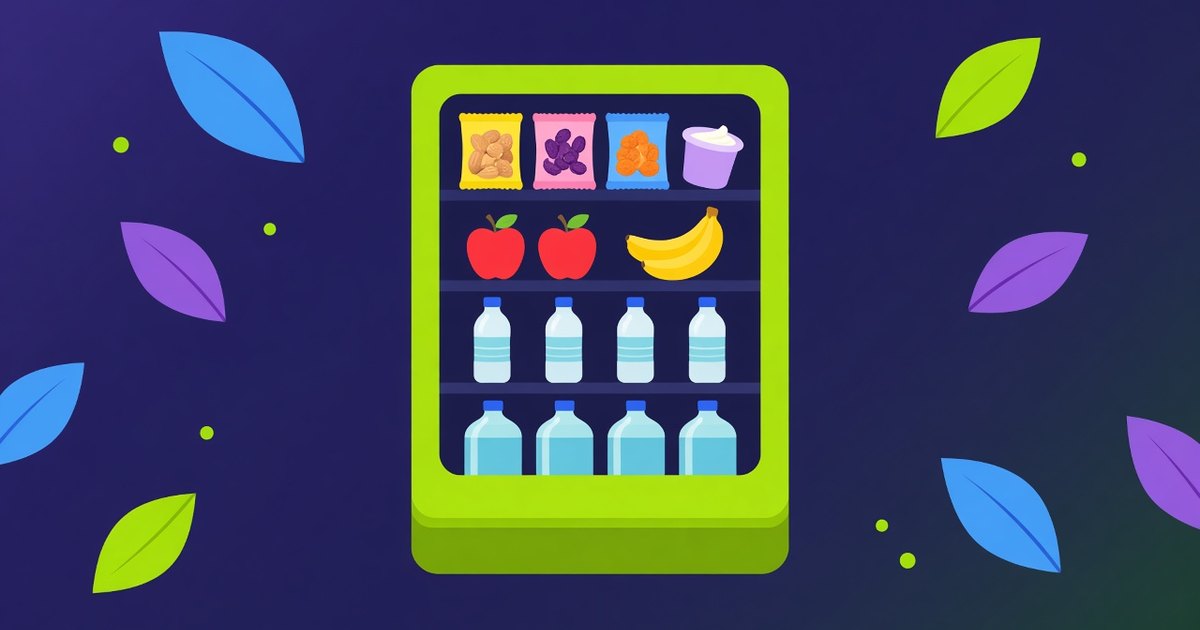
Dry snacks (nuts, dried fruit, bars with simple ingredients), drinks (water, no-sugar-added drinks), and fresh items (sandwiches, salads, fruit). Each category has different storage needs, shelf life, and margin. A well-balanced machine combines all three, but the proportions depend on the site and the operator's logistics.
Dry snacks
Nuts, dried fruit, and simple-ingredient bars are the backbone of such a machine. They keep for a long time, need no refrigeration, and travel well. Offer different pack sizes, because some customers want a small snack and others something more filling. When choosing products, look at the ingredients on the label, not just the slogans on the front of the pack.
Drinks
Water, both still and sparkling, is the most important drink in this kind of machine. No-sugar-added drinks can round out the range. Different bottle sizes let you match different needs: a small bottle for a meeting, a larger one for a full workday or a workout. Drinks sell well all year round, and in summer they often make up the biggest share of sales.
Fresh items
They need refrigeration, often a locked cabinet, and more frequent operator visits. Whole-grain sandwiches, salads, yogurt, or fruit are products customers like to choose, but they have short use-by dates. Selling them takes good planning to keep waste down. A vending cooler or a machine with a refrigerated compartment is essential here.
Labels
Generic terms like "healthy" in commercial communication fall under the EU rules on health claims (Regulation (EC) No 1924/2006). It is safer to show facts: ingredients, nutrition values, allergens. So even when a machine offers simple-ingredient products, base its description on specifics rather than general slogans.
How to describe products
How should products be labeled? With facts from the label, without general health slogans. On a machine sticker or in materials for the site, you can mention product categories, the short ingredient list of a specific product, or that the range includes water and no-sugar-added drinks. If you are unsure whether a description is acceptable, check it with a lawyer.
Machine name and graphics
The machine's look shapes how customers see the offer. Green graphics and photos of fruit or nuts can suggest the character of the range. Here too, avoid slogans that could be read as health claims. A description such as "snacks with simple ingredients" or "water and no-sugar-added drinks" tells customers enough.
Matching the range to the site
In an office, nuts, dried fruit, sandwiches, and yogurt for a mid-morning snack work well. At a gym, customers look for water and post-workout snacks. At a manufacturing plant, filling products for a long shift count. At a university, price matters. Start with a basic set and adjust it based on sales at each site.
Will this kind of machine work
Will this kind of machine work? It depends on the location and users. Start with a few products and watch sales. At some sites, a simple-ingredient range finds customers right away; at others, a mixed machine works better, with such products sitting alongside classic snacks.
A mixed machine
You do not always have to replace the whole range at once. Setting aside a few spirals or a shelf for simple-ingredient products lets you test interest with little risk. If sales grow, you can gradually increase their share. This approach is often safer for the operator and easier for customers used to the existing range to accept.
Refrigeration
With fresh products, refrigeration is crucial. The machine or cooler has to hold the temperature specified by the product manufacturer, and the operator should check it regularly. Telemetry with a temperature alarm allows a quick response to a fault. A locked refrigerated cabinet protects products and helps maintain the right conditions.
Rotation and waste
Fresh products need more frequent visits and good planning. Order what will realistically sell, and watch which products come back unsold. At every visit, check dates and remove products nearing the end of their date. Over time, sales data helps you fine-tune quantities and cut waste.
Choosing suppliers
Fresh-product suppliers should provide regular deliveries, proper transport conditions, and clear labels. With dry snacks, steady availability and variety count. Test new products in small quantities and talk to suppliers about new items. A steady relationship with a few proven suppliers makes planning easier and protects you from gaps when one of them cannot deliver on time.
Prices
Simple-ingredient products can cost more than classic snacks. Offer several price levels so every customer finds something. At companies, an employer subsidy on selected products can help. Prices should be clearly visible for each product and set to suit the location.
Allergens
A simple-ingredient range still needs attention to allergens. Nuts, milk in yogurt, gluten in bread, and sesame are common ingredients in such products. Allergen information is on the label of every packaged product. Arrange products so the label is easy to see, and put the operator's contact details at the machine.
Planogram
Product layout affects sales. Put the most popular products at eye level and fresh products in the refrigerated section where they are easy to spot. Group similar products so customers quickly find what they want. Review the planogram from time to time based on sales, and enter every change in the operator's system too.
Seasonal range
The range can change with the seasons. In summer, demand for water, fruit, and lighter snacks rises; in winter, customers reach for more filling products. Seasonal changes keep interest up and help you match what people need. Plan them ahead together with your suppliers.
Portion size
Smaller packs work well as a quick snack and help keep prices down. Larger portions are useful where a product replaces a meal, for example on a long shift. Offering different pack sizes of the same product gives customers a choice. Sales data will show which portions are most popular at each site.
Telemetry and sales data
With fresh products, telemetry is especially useful. The operator sees what sells and how fast, and can plan deliveries to reduce waste. The data also helps decide which new products to keep and which to replace. A temperature alarm protects products from the effects of a cooling failure.
Packaging
Simple-ingredient products come in many kinds of packaging, from classic bags to jars or lidded containers. When choosing, consider the machine's mechanism, because not every package works well in a spiral. Test new packaging before rolling it out to the whole fleet, to avoid jams and complaints.
Hygiene and cleanliness
A machine with fresh products needs extra attention to cleanliness. Shelves, glass, door seals, and the pickup area should be cleaned regularly. At every visit, check that no product is damaged or leaking. A clean, well-kept machine builds customer trust in everything it offers.
Working with the site
A company or university ordering a simple-ingredient machine often has specific expectations. Learn them before launch and agree on which products will be in the range, how often it will be restocked, and how the site will be told about changes. Put these arrangements in the agreement.
Communicating with users
Customers use a new range more readily when they know about it. A note on the intranet, a short description at the machine, or a tasting of new products can help. Stick to facts: what is in the range, which product categories are offered, and where to find ingredient information. Leave general health slogans out.
Gathering feedback
User feedback helps fine-tune the range. You can collect it with a short survey, a code on the machine, or a conversation with the person responsible for the site. Ask what is missing, what does not work, and which products customers would like to see. Regular changes based on feedback show that the operator listens.
Training the team
The people restocking the machine should know how to handle fresh products: checking dates, arranging stock by date, monitoring temperature, and dealing with damaged packaging. Also explain why general health slogans are not used in machine descriptions. A short guide and a checklist for each visit make the work easier and reduce mistakes.
Before launch
Before launching this kind of machine, check:
- that the range suits the site and customer group,
- that the machine can refrigerate fresh products,
- that the delivery plan keeps waste down,
- that descriptions on the machine are based on facts from labels,
- that labels and prices are easy to see,
- that the operator's contact details are visible.
A list like this helps avoid problems in the machine's first weeks and makes conversations with the site easier.
Summary
A vending machine with simple-ingredient products combines dry snacks, drinks, and fresh items matched to the site. Refrigeration, regular rotation, good suppliers, and well-judged prices are key. In your communication, show facts from labels rather than general health slogans, because those fall under separate rules. Start with a few products and grow the range based on sales.
Related reading: How to Read the Label on a Vending Machine Product and Allergens in Vending Products.
FAQ
Will this kind of machine work? It depends on the location and users. Start with a few products and watch sales.
How should products be labeled? With facts from the label, without general health slogans.
This article is general information only and is not legal advice. Rules change – check the current rules or consult a lawyer before deciding.